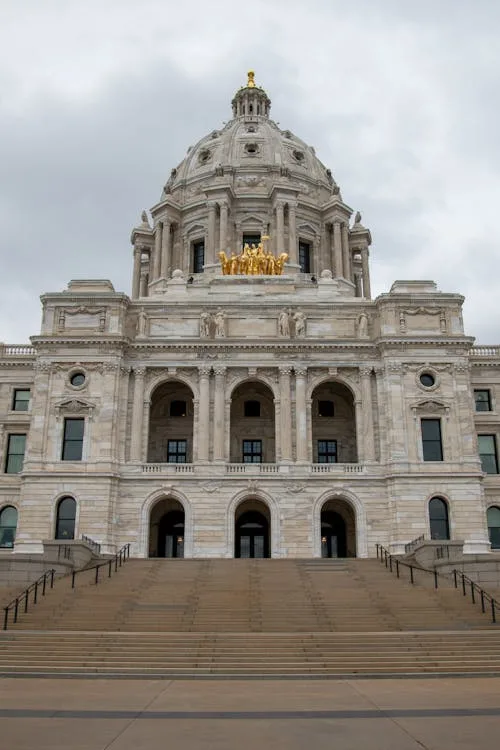
In 2023, Minnesota passed the Clean Slate Act — one of the most significant expansions of criminal record relief in the state's history. For many Minnesotans, it means their record has already been expunged without them having to do anything. For others, it created new petition-based pathways that did not previously exist. Whether you are checking whether the automatic process applied to you, or figuring out how to file a petition for something that does not qualify automatically, this guide covers the full picture.
This guide explains how the law works in general terms. Whether you qualify depends on your specific record, and a judge makes the final call. If your situation is complicated — multiple convictions, charges in multiple states, or a previous denial — consulting a lawyer who handles expungement is worth the cost of a consultation.
The 2023 Clean Slate Act — what it actually does
Minnesota's Clean Slate Act, passed in 2023, created two major changes to how expungement works in the state.
The first is automatic expungement. Eligible misdemeanor and lower-level convictions are now supposed to be expunged automatically, without any petition, no filing fee, and no court appearance. The state seals these records on its own schedule once the waiting period is met.
The second is an expansion of petition-based eligibility. The 2023 law added offense categories that were previously not eligible for petition-based expungement, and in some cases reduced waiting periods.
Here is the important practical reality: the automatic system does not always work perfectly. Not every eligible record has been automatically sealed. If you have an eligible conviction and you are not sure whether it was automatically expunged, order your BCA criminal history report. If the record is still there and you believe it qualifies, you can petition manually.
Minnesota seals both court records and BCA records
This is a detail that sets Minnesota apart from many other states and makes it worth understanding clearly.
In most states, expungement or sealing affects court records — the files maintained by the judicial branch. But background check databases often pull from state law enforcement databases, not just court files. When a state only seals court records, the executive branch records (maintained by the equivalent of the Bureau of Criminal Apprehension) may still show the offense.
Minnesota's expungement seals records in both places: the district court records and the BCA records. That means the record is removed from the statewide criminal history database that most background check companies query, not just from the court file. This dual sealing makes Minnesota expungement more effective in practice than expungement in states that only touch court records.
- District court records — sealed from public view at the courthouse and the court's public online system.
- BCA records — sealed from the statewide criminal history database maintained by the Bureau of Criminal Apprehension.
- Most private background check companies — query BCA data; once BCA updates, most commercial background checks stop showing the record.
- Standard employer background checks — will not show the expunged record.
- Standard landlord background checks — will not show the expunged record.
Federal records (FBI, federal agencies), law enforcement access for criminal justice purposes, and some professional licensing boards are exceptions. Expungement does not affect federal records.
Who qualifies — and who does not
- Misdemeanor convictions after 2 years from discharge (also automatic under Clean Slate)
- Gross misdemeanor convictions after 4 years from discharge
- Eligible felony convictions listed in Minn. Stat. § 609A.02 after 5 years
- Arrests with no conviction — eligible immediately
- Cases dismissed or resolved without conviction
- Cases resolved through diversion or stay of adjudication
- Juvenile records (separate process, generally more available)
- Marijuana convictions (expanded eligibility under Minnesota cannabis reform)
- Most violent felonies (defined under Minn. Stat. § 609.11)
- Murder, manslaughter, and criminal vehicular homicide
- Sex offenses requiring registration as a predatory offender
- Crimes against children in most categories
- Criminal sexual conduct (most offenses)
- Felony DWI convictions
- Domestic assault if prior domestic violence history
- Any case with an open or pending charge
Minnesota's list of eligible felonies in Minn. Stat. § 609A.02 is specific — not all felonies qualify, even non-violent ones. Check your specific charge against the statute or use the MN Courts expungement tool at mncourts.gov.
Not legal advice. This guide explains how the law generally works. Your situation may be different. A lawyer who specializes in expungement can tell you how the law applies to your specific case.
Waiting periods
Minnesota's waiting periods run from the date your sentence was discharged — meaning the date you completed probation, paid all fines, or otherwise finished every condition of your sentence. Not your conviction date. Not your release date if supervision continued. The discharge date.
The clock starts on the date shown below — not your arrest date.
Misdemeanor
Clock starts: Date sentence discharged (probation complete, fines paid)
May qualify for automatic expungement under the 2023 Clean Slate Act.
Gross misdemeanor
Clock starts: Date sentence discharged
No new convictions during the waiting period.
Eligible felony (petition-based)
Clock starts: Date sentence discharged including supervised release
Only specific felonies listed in Minn. Stat. § 609A.02 are eligible. Not all felonies qualify.
Automatic expungement — misdemeanors and lower (Clean Slate Act)
Clock starts: Date sentence discharged
Eligible records sealed automatically. No petition, no fee, no court appearance required.
Arrest with no conviction
Clock starts: Date charges dismissed or case resolved without conviction
Petitions for non-conviction records can be filed immediately.
No filing fee — that is unusual and important
Minnesota does not charge a filing fee to petition for expungement. This is genuinely unusual — most states charge between $50 and $300 to file. Minnesota's decision to waive the fee reflects a policy choice: financial cost should not be the reason people with eligible records cannot access relief.
You will still have some costs: getting your BCA criminal history report ($8–$15), copying and mailing costs for serving agencies, and potentially attorney fees if you hire help. But the court filing itself is free.
How to file a petition in Minnesota
How to file your expungement petition in Minnesota
Check whether your case qualifies for automatic expungement
1 day • $15–$20 for a criminal history checkUnder the 2023 Minnesota Clean Slate Act, many misdemeanor and lower-level records are expunged automatically without any action on your part. Check your state criminal history to see whether the record has already been sealed. If it has not, you may still qualify and can file a petition. Tip: Order your criminal history from the Minnesota Bureau of Criminal Apprehension (BCA) at dps.mn.gov. The report will show you what is currently visible on your record.
Request your BCA criminal history report
1–3 days (online) or 2–3 weeks (mail) • $8–$15Order your official Minnesota criminal history from the Bureau of Criminal Apprehension. This shows every Minnesota conviction, charge, and arrest. You need it to identify every case you want expunged, verify charge classifications, and confirm discharge dates. Tip: The BCA online portal is fastest. Visit dps.mn.gov/divisions/bca and look for Public Criminal History.
Pull your court records
1–3 days • Free to search onlineLocate the court case records for each conviction you want expunged. Minnesota has an online case search at mncourts.gov. You need the case number, conviction date, offense class, and discharge date for each case.
Download and complete the expungement petition
1–2 hours per case • FreeGet the current expungement petition form from mncourts.gov. Minnesota Form EXP201 is the standard petition. Fill it out completely for each case you are seeking to expunge: case number, conviction date, offense, and the statutory basis for expungement. Tip: Minnesota allows you to petition for multiple cases at once. List every case you want expunged on your petition — do not file separate petitions if you can combine them.
File your petition with the district court
1–2 hours • No filing feeFile your petition with the district court in the county where the case was heard. Minnesota does not charge a filing fee for expungement petitions — this is unusual and helpful. The clerk will accept your petition and schedule a hearing. Tip: Minnesota's no-fee policy applies to the petition filing. However, you may have costs for obtaining records and serving agencies.
Serve the required agencies
1 week • Certified mail costs ($5–$10 per agency)Minnesota requires you to serve copies of your petition on the BCA, the prosecutor's office, any law enforcement agency involved in your case, and any correctional facility or supervision agency. Keep proof of service.
Waiting period — agencies have 60 days to respond
60 days • NothingAfter service, agencies have 60 days to respond. The prosecutor may support, oppose, or take no position on your petition. Most uncontested petitions are handled at the scheduled hearing without opposition.
Attend your hearing
30–60 minutes • NothingMinnesota courts schedule a hearing for expungement petitions. Show up, state your case, and be prepared for questions. The judge weighs the benefit to you against any risk to public safety. Come prepared with evidence of what you have done since the conviction. Tip: Bring documentation of employment, housing, education, or any other positive development since your conviction. Judges in Minnesota have discretion and look at the whole person, not just the charge.
Order entered — both courts and BCA records updated
4–8 weeks • NothingMinnesota is unusual in sealing records at both the judicial branch (court records) and the executive branch (BCA records). This dual sealing means your record is more comprehensively protected than in states that only seal court records.
- BCA criminal history report (dps.mn.gov/divisions/bca) — $8–$15
- Court case records from mncourts.gov showing conviction, charge, and discharge date
- Completed expungement petition (Form EXP201, from mncourts.gov) for each case
- List of all agencies to serve: BCA, prosecutor, arresting agency, any probation/correctional agency
- Certified mail supplies for service on required agencies
- Documentation of rehabilitation if available: employment, education, community involvement
- Two copies of everything — one for your records, one for the file
Minnesota allows petitions for multiple cases on one petition. Combine them if possible to simplify the process.
The judge has discretion — be prepared to make your case
Minnesota's expungement statute gives district court judges meaningful discretion. Even if you meet every technical requirement — right offense type, waiting period satisfied, no new convictions — the judge must weigh the benefit to you against any risk to public safety or public policy. In practice, most petitions that meet the legal requirements are granted. But you should not treat the hearing as a formality.
Come prepared. Bring evidence of what your life looks like now: steady employment, housing stability, family responsibilities, completed treatment programs, community involvement. Judges want to see that the past conviction is genuinely in the past, and that granting expungement serves a real purpose.
Free and low-cost legal help in Minnesota
- Minnesota Legal Aid — free civil legal help for income-eligible Minnesotans statewide. mnlegalaid.org or call 1-877-696-6529.
- Mid-Minnesota Legal Aid — serving Greater Minnesota. mmla.net.
- Volunteer Lawyers Network (VLN) — pro bono legal services in the Twin Cities area. mnvln.org.
- Minnesota Courts Self-Help Center — forms, guides, and expungement information at mncourts.gov/selfhelp.
- Neighborhood Justice Center — community dispute resolution and legal help in the Twin Cities. njcmn.org.
- Tubman Legal Advocacy Center — helps survivors of domestic violence with records relief.
Many Minnesota legal aid organizations run specific expungement clinics. Call to check the schedule — walk-in clinics can significantly reduce the time and complexity of the process.
Ready to file? We handle the paperwork.
Pre-filled court forms, step-by-step checklist, and process guidance — so you know exactly what to do next.